

The Five Rules Behind CBK’s Unforgettable Blonde
By Romina Manenti
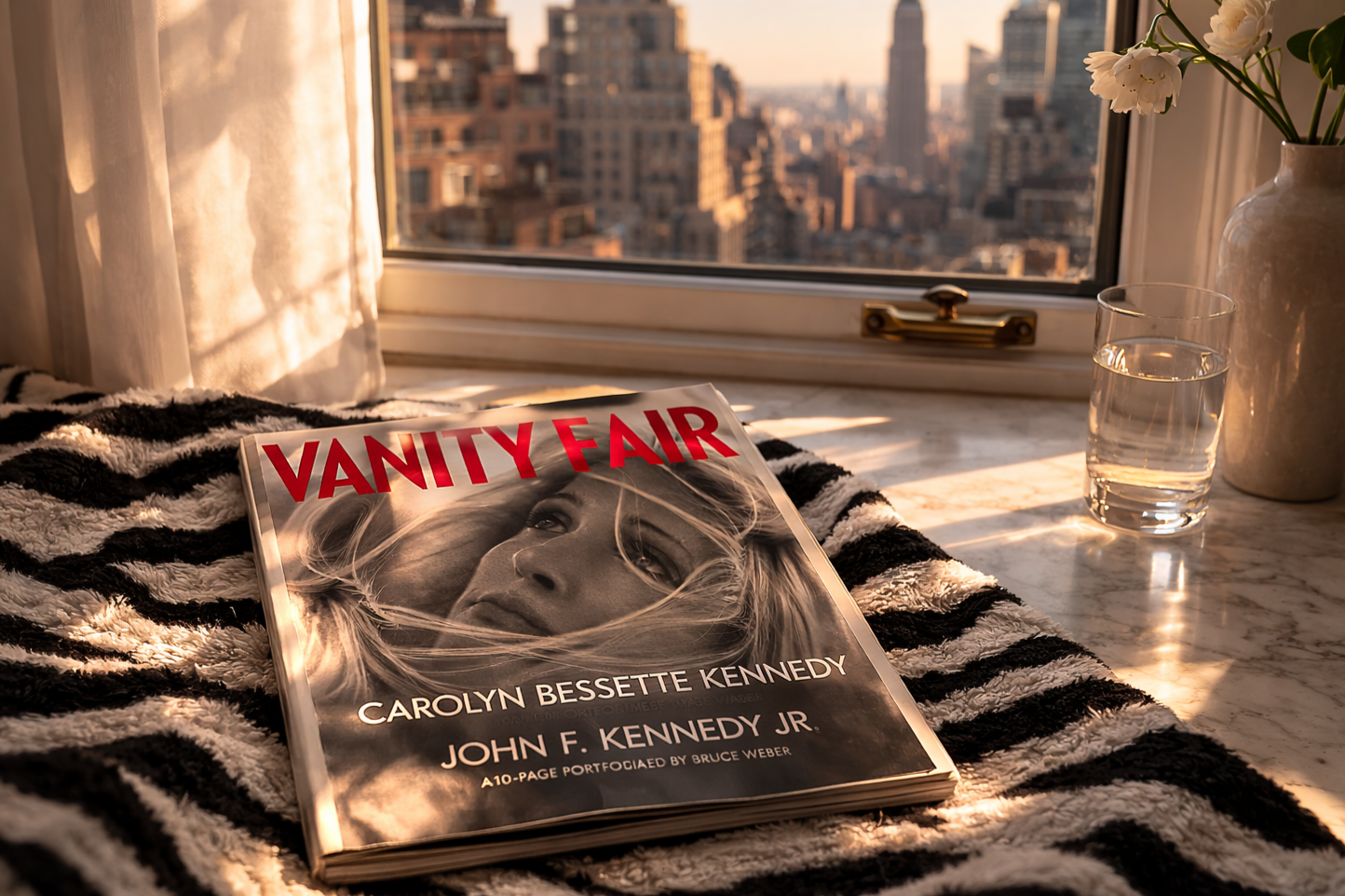
I remember when I first started working in a hair salon in Milan in 1995. At the time Milan was one of the cities where fashion was truly happening. Models, editors, photographers, stylists—everyone seemed to pass through that world. Fashion was everywhere—on every street, every corner—and hair carried the same high standards of expression. That was when I began to understand that blonde was never just a hair color; it was a social statement.
Very quickly I realized that the shade of blonde a woman chose said something about her. Sometimes even before she spoke. Some blondes felt aristocratic and composed, others rebellious, effortless, almost careless. The nuance of the tone could completely shift a woman’s presence.
The shade of blonde hair can swing from world-class elegance to grunge, from a gala gown to skinny jeans and a T-shirt. The color alone can move a look from polished to undone, from classic to modern.
Over the years, one reference always stayed in my mind: Carolyn Bessette-Kennedy.
The blonde she wore became iconic not simply because it was blonde, but because it redefined what a luxury blonde looked like.
In the 1990s, many blondes were dramatic—platinum, heavily highlighted, clearly processed. Carolyn’s hair moved in the opposite direction. It looked softer, more natural, and quietly refined. Nothing about it felt forced or overworked. In a way, she made peroxide look quietly aristocratic.
And that restraint is exactly what made it unforgettable.
1. The Tone Was Perfectly Neutral
Her blonde lived in a very specific tonal space: beige, wheat, and champagne.
Most blondes fall into obvious categories—either warm golden blondes or cool icy blondes. Carolyn’s color avoided both extremes. It stayed perfectly balanced between warm and cool pigments.
This balance is difficult to achieve because the color must be carefully calibrated so that neither warmth nor ash dominates. When it works, the result is a blonde that feels extremely natural and refined.
The neutrality of the tone also allowed the color to adapt beautifully to light. Outdoors it appeared slightly warmer; indoors it leaned cooler. Yet it never became brassy or grey. Instead, it maintained a quiet luminosity that enhanced the skin and facial features without competing with them.
This is why the color felt sophisticated rather than fashionable. It didn’t follow a trend—it simply looked right.
2. The Roots Were Intentionally Real
Another distinctive element of her blonde was the presence of natural depth at the roots.
During the 1990s many blondes were lifted aggressively from root to tip, creating a uniform color that required constant maintenance. Carolyn’s hair preserved a subtle shadow at the scalp.
That root softness created a gradual transition from darker tones at the crown to lighter lengths through the mid-shaft and ends. The effect was dimensional and believable, almost as if the color had developed naturally over time.
From a technical perspective, this depth gives blonde hair structure. It creates contrast that allows light to move through the hair instead of flattening it. The result is a blonde that appears richer, thicker, and far more authentic.
This detail is small, but it is one of the reasons the color looked effortless.
3. The Cuticle Reflected Light Beautifully
Her blonde hair always appeared glossy and healthy, which is crucial because blonde hair often risks looking dry or matte when it is over-processed.
The surface of her hair reflected light evenly. That reflection comes from a smooth cuticle, meaning the hair had not been lifted too aggressively and was likely maintained with conditioning treatments and glosses rather than repeated bleaching.
When the cuticle is intact, light travels along the strand instead of scattering. This produces that luminous sheen often described as “expensive hair.”
It’s an important distinction: the beauty of her blonde hair did not come only from the color formula, but from the condition of the hair itself.
4. The Blonde Worked With Minimalism
Her hair also belonged to a broader aesthetic that defined the era surrounding Calvin Klein, where she worked before marrying John F. Kennedy Jr.
The clothing associated with that world—black wool coats, silk slip dresses, neutral tailoring—was intentionally simple. Against that restrained palette, her blonde became a subtle point of light.
The softness of the hair balanced the sharpness of minimalist fashion. It framed the face and added warmth without disrupting the calm, refined tone of the overall look.
In that context, the blonde was not just a hair color. It became part of a complete visual language built on elegance, restraint, and clarity.
5. It Felt Effortless, Not Aspirational
Perhaps the most powerful aspect of Carolyn Bessette’s blonde was the impression it gave: that it required almost no effort at all.
Many famous blondes feel aspirational because they look highly maintained—freshly highlighted, heavily styled, or obviously transformed. Her hair suggested something different. It appeared natural, as though the color simply belonged to her.
Of course, that effortless effect was carefully constructed. Achieving it requires discipline: subtle color work, healthy hair, precise cutting, and restrained styling.
Yet to the observer the result felt completely unforced. That quiet confidence is what elevated the look beyond trend and turned it into something iconic.
In essence, her blonde represented balance:
warm and cool
polished yet relaxed
luminous yet natural
minimal yet luxurious
It proved that the most memorable blonde is not the loudest one—it is the one that looks like it was never created at all.
Romina Manenti
Founder and Creator MAY11

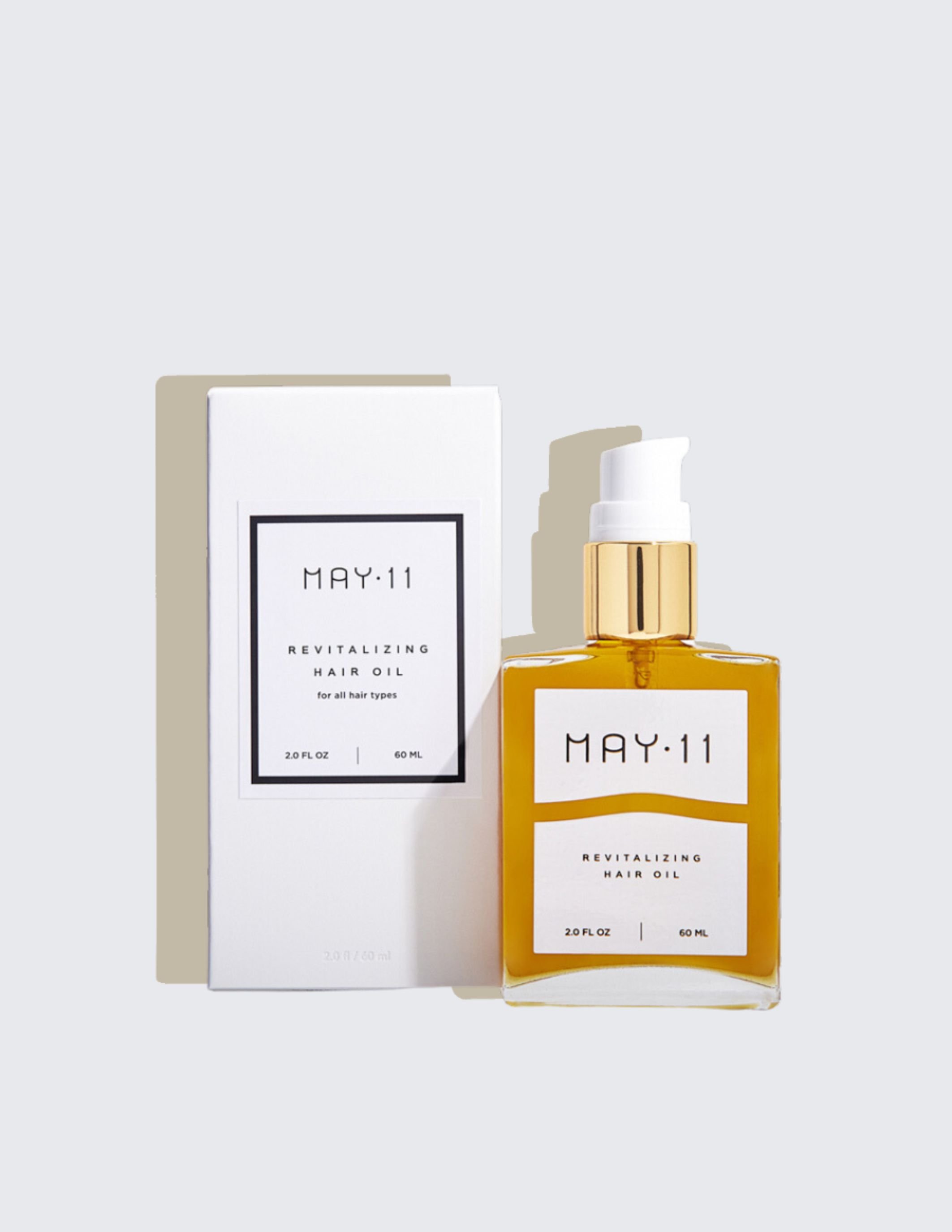

A revitalizing, multitasking, ultra-nourishing hair oil treatment designed to restore the natural health and beauty of all hair types and textures. Formulated with 100% pure, vegan, organic carrier oils.
This high-performing blend is enriched with the dynamic duo of Jamaican Black Castor Oil and Hemp Seed Oil, working wonders to promote healthy hair growth. The oil treatment acts as a cure-all remedy, strengthening, moisturizing, and brightening your luscious strands. Our patented formula goes beyond ordinary oils by providing a protective shield against UV rays, harsh climates, and the damaging effects of chlorinated or salty water, thanks to its natural SPF and sealing properties.
BENEFITS
Restores lifeless hair with vitamins and minerals
Repairs weakened hair through vegetable protein moisture
Magnifies hair shine and elasticity
SIGNATURE SCENT
Experience the all-natural allure of Neroli Essential Oil, a blossom scented-aroma that combines vibrant floral and citrus notes. Scented with certified organic essential oil.
Our Revitalizing Hair Oil is also available Infused in the Original formula and Fragrance-Free.
Patented Formula. US 10,493,019 B1
FREE US Shipping on orders $160+