

A Guide to Choosing the Right K-Beauty Hair Products
Curiosity is where understanding begins.
By Romina Manenti
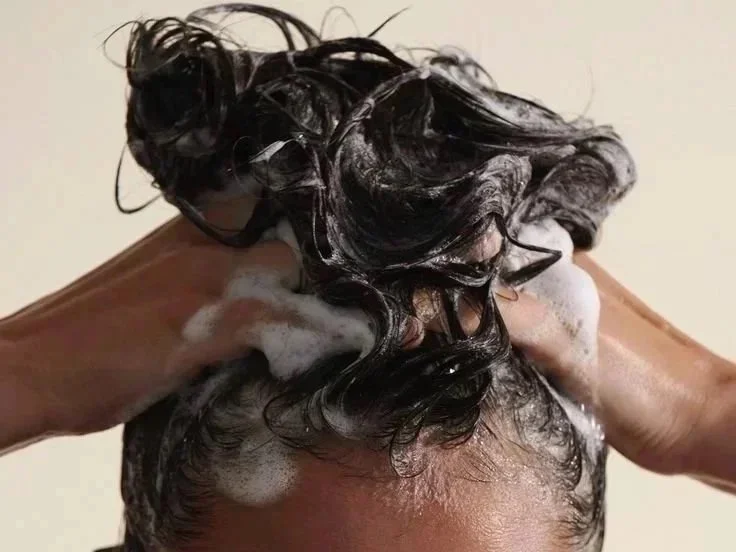
Following the success of our last blog, “K-Beauty and Haircare: 5 Questions Raised by a Professional,” and the thoughtful engagement it sparked, I now have a clearer sense of what comes next.
K-Beauty haircare is still approached with equal parts fascination and confusion. The products look refined, the claims are expressed differently, and the routines don’t always match Western habits. That gap often leads to misunderstanding—not because the formulas don’t perform, but because perception shapes expectations, and expectations shape how a product is used.
Curiosity is the common ground between consumers and professionals. We approach it from different angles, but it helps reveal where the industry stands today—and where it’s moving.
With this article, I want to expand the MAY11 Blog into a broader beauty perspective rooted in point of view, curated knowledge, and careful observation. My goal isn’t to promote trends or “must-haves,” but to update understanding, ask better questions, and build lasting awareness.
This guide is not about what to buy. It’s about how to choose, how to test, and what to observe—so K-Beauty haircare can be understood on its own terms, rather than judged through Western expectations. Too often, a product is tried once, immediate results are expected, and the experience ends there. Instead, the better lens is: “What’s different?” not “What’s better?”
How to Read the Labels: Learning Before Buying
K-Beauty haircare feels different because you’re meant to read the label differently. Western labels usually start with a bold promise and one “hero” ingredient—Repair, Anti-Frizz, Keratin + Argan Oil—as if a single headline could explain everything the formula does. The message is clear: here’s the problem, here’s the solution.
K-Beauty takes a quieter approach. Instead of selling a dramatic transformation, the label often tells you what role the product plays in your routine: daily cleansing, scalp comfort, moisture balance, low-irritation care. It’s less about a miracle and more about method.
A helpful habit is to look at the ingredient list (INCI) as your reality check. Ingredients are listed roughly from highest to lowest concentration, which means the first five to eight ingredients reveal what the formula is truly built on. Anything near the end is usually present in small amounts—sometimes more storytelling than structure.
In many Western formulas, you’ll often find stronger cleansing agents paired with quick “finish” ingredients like conditioning polymers or silicones. These deliver immediate softness, shine, and that polished feeling after one wash. In many K-Beauty formulas, you’ll more often see gentler cleansers alongside hydrators and soothing ingredients such as glycerin, panthenol, or centella—designed to support the scalp and hair over time and tolerate frequent use.
So the shift is simple but powerful. Instead of asking,
“What dramatic result is this promising me?”
try asking,
“What job is this product meant to do in my routine?”
Why K-Beauty Chooses Curation Over Proliferation
K-Beauty brands often appear more restrained than Western brands on store shelves—not because they offer less, but because they’re built around method rather than multiplication. Instead of expanding into dozens of near-identical SKUs, many Korean haircare lines are conceived as systems: a small number of products designed to be layered, adjusted by frequency, and paired according to scalp condition rather than a fixed hair “type.”
This naturally leads to tighter portfolios—cleanse, balance, treat, protect—where every formula has a defined job and any overlap is intentional rather than repetitive. Segmentation tends to follow conditions and functional goals, not just a promised aesthetic finish. The trade-off is real: fewer SKUs can mean that certain hair profiles or edge-case concerns aren’t fully addressed in one brand’s range.
At the same time, a limited line can make room for what Western shoppers often need most right now: clearer education, easier decision-making, and routines that are simpler to repeat. It can also support faster reformulation and quicker iteration as new ingredients and standards evolve. By contrast, broader portfolios often prioritize variety and immediate cosmetic outcomes—offering more choice, but also more redundancy and confusion, especially in markets already saturated with options.
K-Beauty’s restraint signals something different: a belief that performance comes from coherence, consistency, and repeatability, not abundance. And in a category where most people quit after one try, that design philosophy matters.
How K-Beauty Resonates with Western Consumers
I’ve seen this shift firsthand through two close friends of mine in the U.S. After visiting a Korean beauty clinic and spa, they independently decided to replace their usual $35 shampoo with a $35–$45 K-Beauty shampoo. There was no professional incentive behind the switch—just curiosity and a desire to extend the experience they had discovered abroad.
Interestingly, the conversation didn’t begin with K-Beauty at all. It started naturally, when I saw them and simply said, “Wow—your hair looks great.” I’ve been friends with both women for over ten years. They’re not professionals, not influencers—just women who, like many of us, enjoy discovering how beauty evolves.
When I asked what had changed, their answers were different, yet equally revealing.
One felt the difference from the very first wash: more volume, more softness, and hair that moved with ease.
The other described a subtler but telling shift: her hair felt cleaner—lighter at the roots, fresher for longer.
Two women, two experiences, two timelines.
Naturally, my next question was whether the shampoo was simply maintaining and extending the promises of the spa treatment—acting as an at-home continuation of what the clinic had initiated. And that, perhaps, is the key. K-Beauty doesn’t promise uniform results or instant transformation for everyone. It respects individual biology, scalp condition, and cumulative care.
Perhaps that is precisely why K-Beauty resonates so strongly with Western consumers: it doesn’t ask to be believed immediately.
It asks to be observed.
What K-Beauty Actually Offers: A Look at the Core Categories
If you’re ready to translate this approach into practice, it helps to understand how K-Beauty structures its haircare categories—especially in the U.S. market.
Most K-Beauty haircare available in the U.S. falls into these core ranges:
Scalp cleansing shampoos – low-irritation, pH-respectful formulas designed for frequent use
Scalp treatments & essences – leave-on tonics, serums, or ampoules for balance and comfort
Lightweight conditioners – hydration and elasticity without heavy coating
Targeted treatment masks – used occasionally, not as daily correction
Scalp exfoliators or peeling products – gentle buildup removal and scalp preparation
Root-strengthening / hair-loss support lines – focused on scalp environment and follicle support
Minimal styling & protective products – lightweight leave-ins and heat protection rather than strong hold
Compared to Western brands, what’s noticeably limited is just as telling: fewer texture-specific SKUs, fewer heavy oils and butters, and far fewer styling products. The philosophy remains consistent—care first, control later.
From Reading to Testing: A Practical Note
If you’ve followed the logic of this article and feel ready to move from understanding to experience, this is the moment to test with intention. The next step is simple: explore, browse, and observe what K-Beauty haircare looks like on real shelves.
Approach the test the way K-Beauty approaches care—with patience, attention, and consistency. Results may appear immediately, or progressively over time. Both are valid.
K-Beauty does not ask Western consumers to abandon their routines. It simply invites a reconsideration of where performance begins. And sometimes, that shift alone changes everything.
If you choose to begin your own test and questions arise along the way, this is the space to continue the conversation. Have fun
Romina Manenti
Founder and Creator MAY11

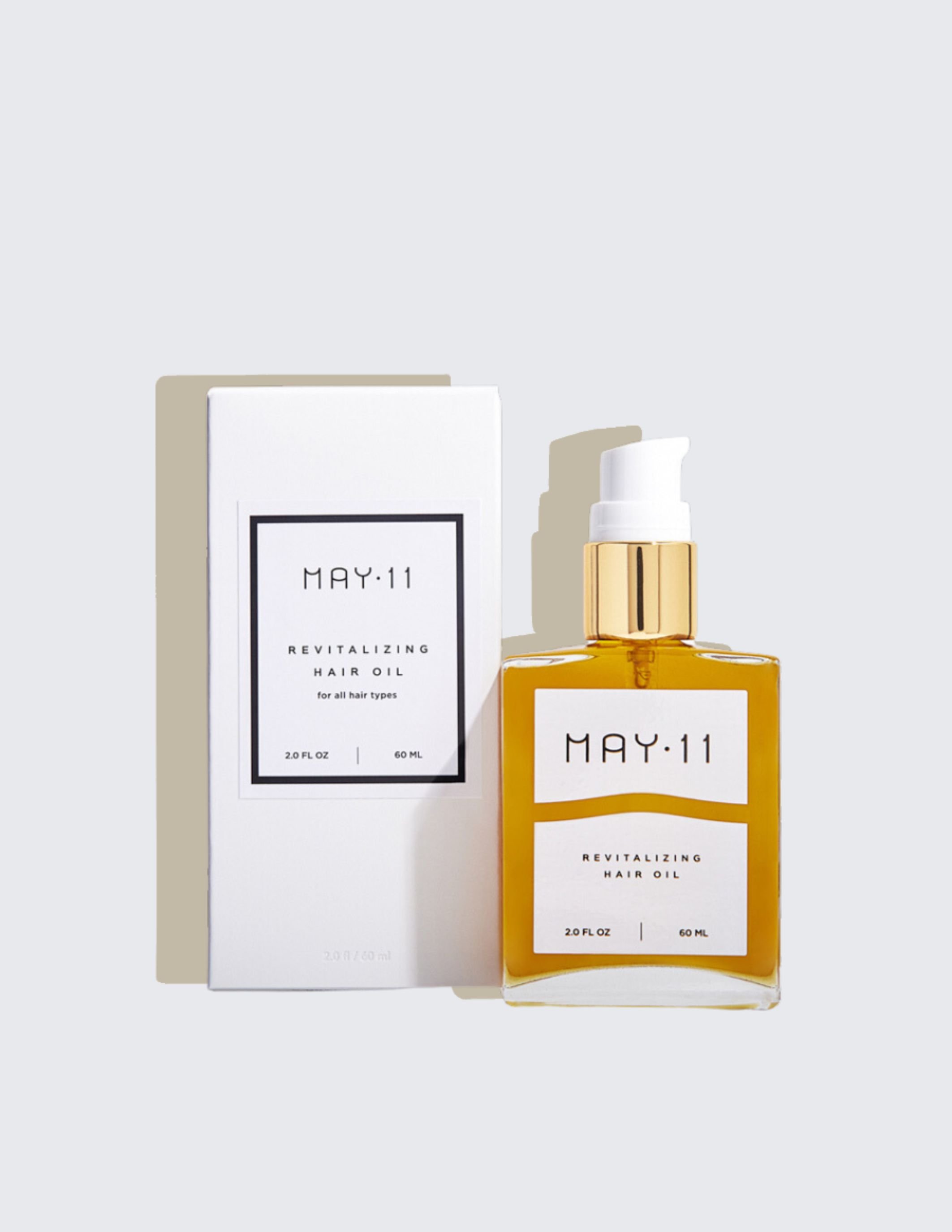

A revitalizing, multitasking, ultra-nourishing hair oil treatment designed to restore the natural health and beauty of all hair types and textures. Formulated with 100% pure, vegan, organic carrier oils.
This high-performing blend is enriched with the dynamic duo of Jamaican Black Castor Oil and Hemp Seed Oil, working wonders to promote healthy hair growth. The oil treatment acts as a cure-all remedy, strengthening, moisturizing, and brightening your luscious strands. Our patented formula goes beyond ordinary oils by providing a protective shield against UV rays, harsh climates, and the damaging effects of chlorinated or salty water, thanks to its natural SPF and sealing properties.
BENEFITS
Restores lifeless hair with vitamins and minerals
Repairs weakened hair through vegetable protein moisture
Magnifies hair shine and elasticity
SIGNATURE SCENT
Experience the all-natural allure of Neroli Essential Oil, a blossom scented-aroma that combines vibrant floral and citrus notes. Scented with certified organic essential oil.
Our Revitalizing Hair Oil is also available Infused in the Original formula and Fragrance-Free.
Patented Formula. US 10,493,019 B1
FREE US Shipping on orders $160+